What Are Nuclear Weapons - And Who Has Them?
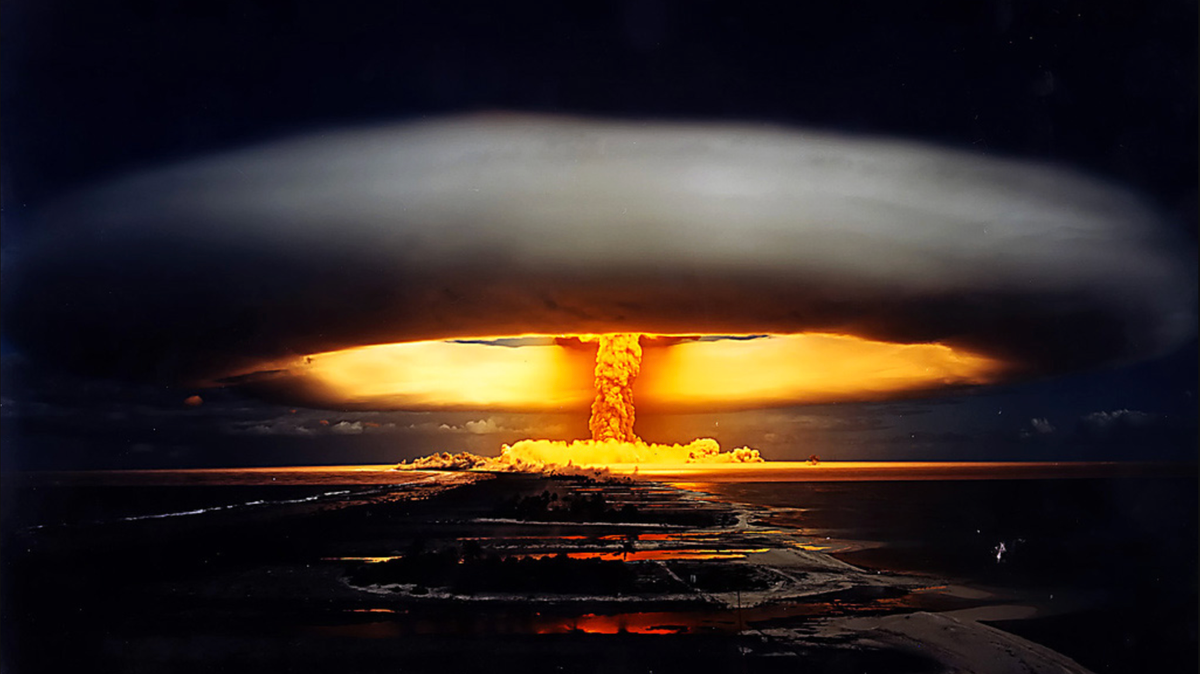
We have all heard of them and they are the most destructive weapons ever built. But what are they? Who has them? How many? And what kind?
A single nuclear weapon that is dropped on a city, can kill hundreds of thousands of people within seconds. Understanding what these weapons are, who controls them, and why they exist is essential to understanding many of the worlds geopolitical conflicts and the power dynamics between countries.
Where Did They Come From?
Nuclear weapons were born out of World War II. In 1939, physicists Leo Szilard and the by then already famous Albert Einstein warned US President Roosevelt that Nazi Germany might be developing a so called atomic bomb. The United States responded by launching the Manhattan Project. A secret research program involving over 130,000 people across the US, UK and Canada with the idea of building the atomic bomb before Germany could.
On July 16, 1945, the first nuclear weapon was successfully tested in the New Mexico desert. Three weeks later, atomic bombs were dropped on the Japanese cities of Hiroshima and Nagasaki. The devastation was catastrophic with an estimated death toll between 130.000 and 230.000 people. The world would never be the same.
World War II was over. The nuclear age had begun.
But What Is a Nuclear Weapon?
A nuclear weapon uses energy released from the nucleus of an atom to create a massive explosion that is thousands of times more powerful than any conventional bomb. But not all nuclear weapons are the same, there are two basic types.
Fission bombs, also called atomic bombs, split heavy atoms like uranium or plutonium apart. The energy released by that splitting process is enormous. This is the type of bomb that was dropped on Hiroshima and Nagasaki in 1945.
Fusion bombs, also called hydrogen bombs or thermonuclear weapons, work by forcing light atoms together at extreme heat and pressure. They are a lot more powerful than fission bombs. Most modern nuclear weapons are fusion-based.
To put the difference in perspective, the modern hydrogen bomb is several thousand times more powerful than the bombs dropped in 1945. If it gets dropped on a busy big capital casualties could be in the millions.
Who Has Nuclear Weapons Today?
Nine countries are currently known or believed to possess nuclear weapons but not all are the same:
| Country | Estimated Warheads |
|---|---|
| Russia | ~5,580 |
| United States | ~5,044 |
| China | ~500 |
| France | ~290 |
| United Kingdom | ~225 |
| Pakistan | ~170 |
| India | ~172 |
| Israel | ~90 (unconfirmed) |
| North Korea | ~50 |
Russia and the United States together hold roughly 90% of all nuclear weapons on Earth.
Five of these countries, the US, Russia, China, France and the UK, are officially recognised as nuclear states under the Nuclear Non-Proliferation Treaty (NPT), the international agreement designed to prevent the further spread of nuclear weapons. India, Pakistan and North Korea never signed it. Israel has never officially confirmed or denied its nuclear arsenal. All countries that signed the NPT have promised not to develop nuclear weapons and the ones that have them promised to work towards reducing their stockpile. The NPT also states that using nuclear energy for peaceful purposes is legal. The International Atomic Energy Agency (IAEA) exists to verify compliance through inspections.
"The Nuke", And What Else?
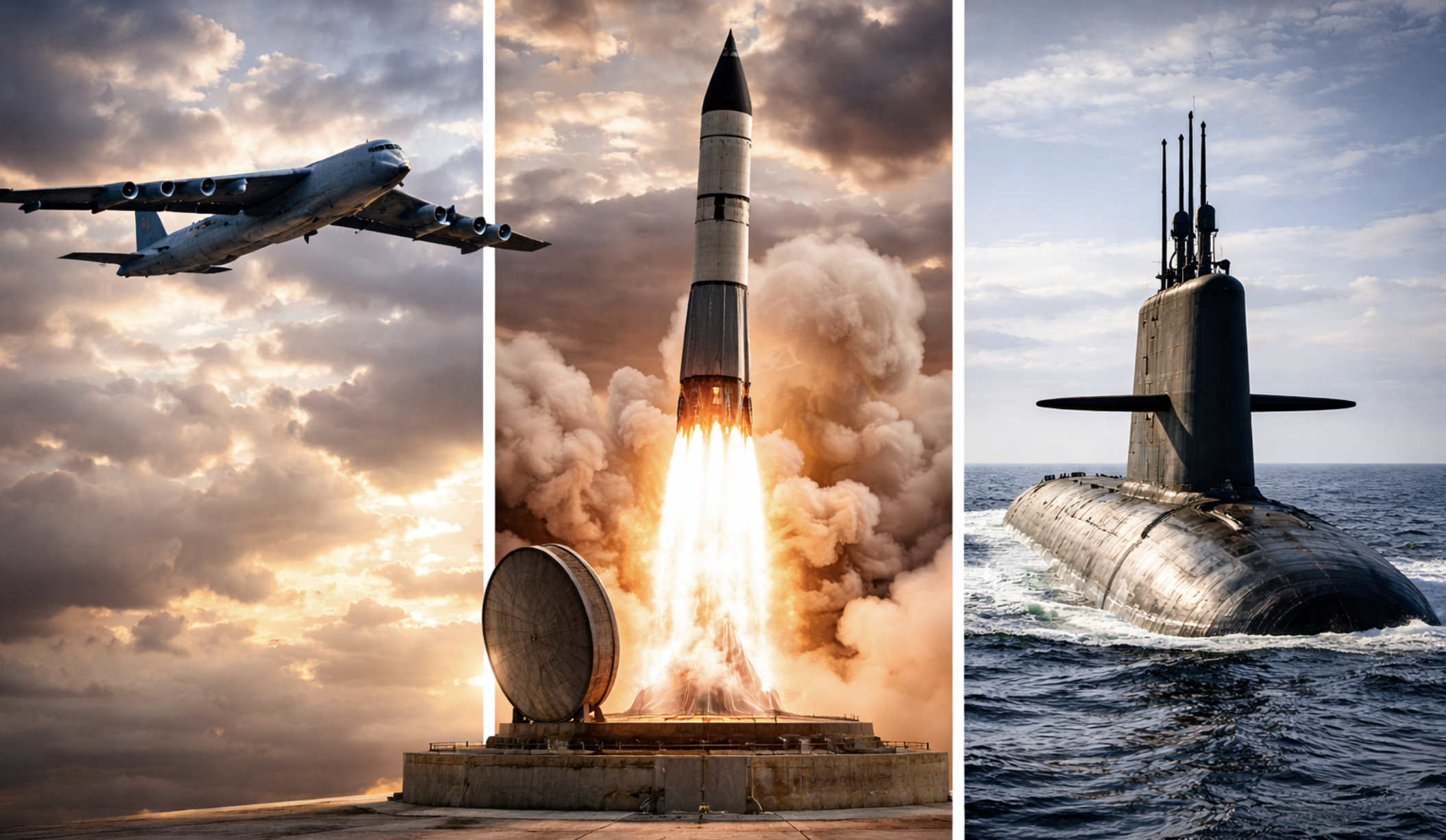
Modern nuclear arsenals are not just bombs dropped from aircraft. Delivery systems have evolved significantly:
Intercontinental Ballistic Missiles (ICBMs) are launched from land-based silos and can reach targets on the other side of the world within 30 minutes.
Submarine-Launched Ballistic Missiles (SLBMs) are fired from nuclear submarines hidden deep underwater. Because submarines are nearly impossible to locate and destroy, they guarantee a country can always strike back even if attacked first.
Tactical nuclear weapons are smaller, shorter-range weapons designed for use on a battlefield rather than against cities. They are considered more likely to actually be used in a conflict, which makes military planners particularly nervous about them.
The combination of land, air and submarine delivery is called the nuclear triad, a concept NATO members have mainly built their defense around.
Why Have They Never Been Used Since 1945?
This is perhaps the most important question in modern geopolitics, and the answer is Mutually Assured Destruction, or, not accidentally, MAD.
The logic is simple: if country A launches a nuclear strike against country B, country B will always have enough time and surviving weapons to completely destroy country A in return. Both sides will be totally destroyed and there is no winner, just endless loss of life and civilization.
This creates a paradox where the most destructive weapons ever built are also the weapons least likely to ever be used, because using them guarantees your own destruction. The deterrence works precisely because both sides understand this.
It is an uneasy, imperfect balance but it has held for over 80 years. The threat is always there.